|
|
This and That August 2014
Those Roses of Picardy Had Terrible Thorns...
A World War I Centennial Observance One hundred years ago, on July 28, 1914, the world went to war. The Great War began as a local conflict over a minor issue, but eventually it engulfed much of Europe and drew in, directly or indirectly, all the major powers of the world. It was, at the time, the most destructive and widespread war the world had ever seen. |
|
|
The War That Ended Peace: The Road to 1914by Margaret MacMillanPresents a narrative portrait of Europe in the years leading up to World War I that illuminates the political, cultural, and economic factors and contributing personalities that shaped major events.
|
|
|
|
The Guns of Augustby Barbara Wertheim TuchmanA definitive Pulitzer Prize-winning recreation of the powderkeg that was Europe during the crucial first thirty days of World War I traces the actions of statesmen and patriots alike in Berlin, London, St. Petersburg, and Paris.
|
|
|
|
The Great War: A Combat History of the First World Warby Peter HartFocusing on the decisive engagements of World War I, the author explores the immense challenges faced by the commanders on all sides, looking at the changing weapons and tactics and offering his own assessment on what brought about the war's outcome.
|
|
|
|
Fighting the Flying Circus : The Greatest True Air Adventure to Come Out of World War I
by Edward V. Rickenbacker
A first-hand account of air combat in World War I, by an American “ace of aces.” Eddie Rickenbacker.In this book he recounts how he achieved 26 confirmed kills in less than a year of combat on the Western Front, rising from the ranks to lead the famed “Hat-in-the-Ring” squadron. In this book he unflinchingly explains all of the errors that he made in combat, and how he learned to become a better dogfighter. He also gives the reader a glimpse of the tremendous psychological pressure that came from being America's leading ace – every previous holder had been shot down – and from his own leadership style of leading from the front.
|
|
|
|
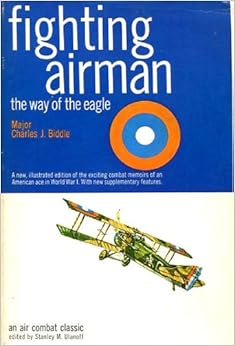
Fighting Airman: the Way of the Eagle by Charles John BiddleAn Air Combat Classic edited by Stanley M. Ulanoff, in this case a republication of American airman Major Charles J. Biddle, who volunteered for service in France previous to America's entry in World War I. He writes of training, of service in Escadrille N. 73 and the Escadrille Lafayette, command in the 13th Aero Squadron and 4th Pursuit Group, A.E.F. The appendix covers Major Biddle's service record, confirmed victories, citations; leading Allied and German aces; a chronological summary of the war; ""Fighter Tactics"" by Captain Albert Deulin translated by then Captain Charles J. Biddle; aircraft specification and data.
|
|
|
|
The Last Days of Innocence : America at War, 1917-1918by Meirion HarriesAn expertly researched, compelling history traces the unprecedented, massive mobilization of American society between April 1917 and November 1918 to fight Germany in World War I, and its deep effects on Americans' attitudes toward their government.
|
|
|
|
Up the Line to Deathby Brian GardnerAn anthology of the poetry of World War 1. There are 72 poets represented here, of whom 21 died in action. Many of the poems have notes and introductions.
|
|
|
|
Some Desperate Glory : The First World War the Poets Knewby Max EgremontA centenary tribute to the Great War as reflected through the lives and art of its poets includes discussions of such writers as Wilfred Owen, Siegfried Sassoon and Robert Graves and is complemented by a chronological poetry anthology.
|
|
|
|
To Conquer Hell: the Meuse-Argonne, 1918by Edward G. LengelAn authoritative chronicle of the 1918 battle of the Meuse-Argonne region of France details the bloodiest battle in American history, one that cost more than 120,000 casualties and 26,000 lives, and offers an in-depth account of the campaign, events of the battle, portraits of soldiers who took part, and its long-term legacy for the Great War and the American military.
|
|
|
|
Hundred Days: The Campaign That Ended World War I
by Nick Lloyd
Describes the difficult and bloody four-month battle that tipped the stalemate on the Western Front in favor of the Allies in 1918 and drove back the Germans, bringing World War I to an end.
|
|
|
|
Seven Pillars of Wisdom: A Triumphby T. E. LawrenceThe classic account of the Arab tribes' guerrilla warfare against Turkish forces during World War I and of Lawrence's part in and reflections on that warfare
|
|
|
|
Storm of Steelby Ernst JüngerProvides a memoir of the First World War through the eyes of an ordinary German soldier who viewed the war as a personal struggle, testing himself by leading raiding parties and enduring as his comrades were killed.
|
|
|
|
To the Last Man: Spring 1918by Lyn MacdonaldAn oral history of the final German offensive during World War I chronicles the last major battle in that war in all its horror, from the generals and officers who planned it to the soldiers who were killed and maimed carrying out their orders.
|
|
|
|
Unknown Soldiers: The Story of the Missing of the First World Warby Neil HansonFocuses on the tragedy of the First World War by resurrecting the lives and experiences of three unknown soldiers--one English, one German, and one American--providing insight into these three soldiers' lives and revealing the Great War in all its horror and tragedy, based on each man's letters and diaries.
|
|
|
Woodbridge Public Library
732-634-4450

|
|
|